service@lencolo37.com |
+86 18027002837(WhatsApp)

Search for Products.
Choosing a polyurethane acrylate oligomer manufacturer in China involves more than comparing prices. Buyers need to evaluate resin chemistry, viscosity, functionality, curing behavior, application suitability, quality consistency, and technical support.
Polyurethane acrylate oligomers are widely used in UV-curable coatings, printing inks, adhesives, plastic coatings, and 3D printing materials. However, a resin that performs well in a flexible adhesive may not be suitable for a hard, scratch-resistant coating. The most effective selection process starts with the end application and then matches the oligomer's properties to the required performance.
This guide explains the key technical factors to consider when sourcing polyurethane acrylate oligomers in China and introduces Lencolo as one manufacturer to consider when evaluating UV-curable resin suppliers.
1. Key Chemical Properties of Polyurethane Acrylate Oligomers
Molecular Weight and Backbone Chemistry
Molecular weight and backbone structure influence viscosity, flexibility, film formation, adhesion, and mechanical properties. Lower-molecular-weight materials may help reduce formulation viscosity, while higher-molecular-weight oligomers can contribute to film strength and toughness. The actual effect depends on the resin structure and formulation.
The backbone also affects cured-film behavior:
Polyether-based structures: Often selected for flexibility and elongation.
Polyester-based structures: Can provide a balance of mechanical properties and adhesion.
Polyurethane-based structures: Offer opportunities to combine toughness, flexibility, and adhesion.
Buyers should request relevant technical data rather than selecting a resin based on molecular weight alone.
Functionality and Crosslink Density
Functionality refers to the number of reactive acrylate groups in a molecule. It affects crosslink density and therefore influences hardness, chemical resistance, curing response, flexibility, and shrinkage.
Difunctional polyurethane acrylates are often considered for flexible coatings and adhesives. Higher-functionality grades may be useful when greater hardness, abrasion resistance, or chemical resistance is required. However, increasing functionality can also increase shrinkage and brittleness in some formulations.
The right balance depends on the substrate, film thickness, monomer selection, and curing conditions.
Viscosity and Processing
Viscosity influences mixing, pigment dispersion, leveling, spraying, printing, and application efficiency. Low-viscosity oligomers can be useful in inkjet inks and spray coatings, while higher-viscosity materials may be suitable for other coating or adhesive systems.
When comparing polyurethane acrylate oligomer manufacturers in China, buyers should check the viscosity test temperature and method. They should also evaluate viscosity after blending with the intended reactive diluents, since the final formulation may behave differently from the neat oligomer.
Curing Speed and Reactivity
UV curing performance depends on several factors, including oligomer chemistry, photoinitiator selection, UV wavelength, lamp intensity, film thickness, pigment loading, and line speed.
A surface that feels dry does not necessarily indicate complete curing throughout the film. For demanding applications, buyers should evaluate both surface cure and through-cure under realistic production conditions.
2. Different Types of Polyurethane Acrylate Oligomers
Aromatic and Aliphatic Grades
Aromatic polyurethane acrylates can offer an economical route to hardness and mechanical performance. However, their color stability may be less suitable for applications where long-term appearance and low yellowing are important.
Aliphatic polyurethane acrylates are commonly considered for transparent coatings and applications requiring better color stability. They may be used in plastic coatings, protective finishes, and other systems exposed to light.
The choice should reflect the actual requirements for color, hardness, flexibility, weathering, and cost.
Difunctional and Multifunctional Grades
Difunctional grades are often considered when flexibility, toughness, and adhesion are priorities. Multifunctional grades can help increase crosslink density, hardness, and abrasion resistance.
For example, Lencolo offers several polyurethane acrylate grades positioned for different formulation requirements:
These grades are examples of application-oriented resin options, not universal replacements for one another. Final selection should be based on the latest technical data sheet and formulation testing.
Solvent-Free and Solvent-Diluted Systems
Solvent-free polyurethane acrylates are used in 100% solids UV-curable systems, where viscosity adjustment is commonly achieved through reactive diluents.
Solvent-diluted systems may be considered for processes requiring a particular application viscosity or film formation behavior. Buyers should confirm solids content, solvent compatibility, VOC requirements, and processing conditions before selecting a grade.
3. Matching Polyurethane Acrylate Oligomers to Applications
UV Coatings
UV coatings require a suitable balance of adhesion, hardness, flexibility, leveling, and curing speed. Plastic coatings may need flexibility and substrate adhesion, while protective topcoats may prioritize scratch resistance and chemical resistance.
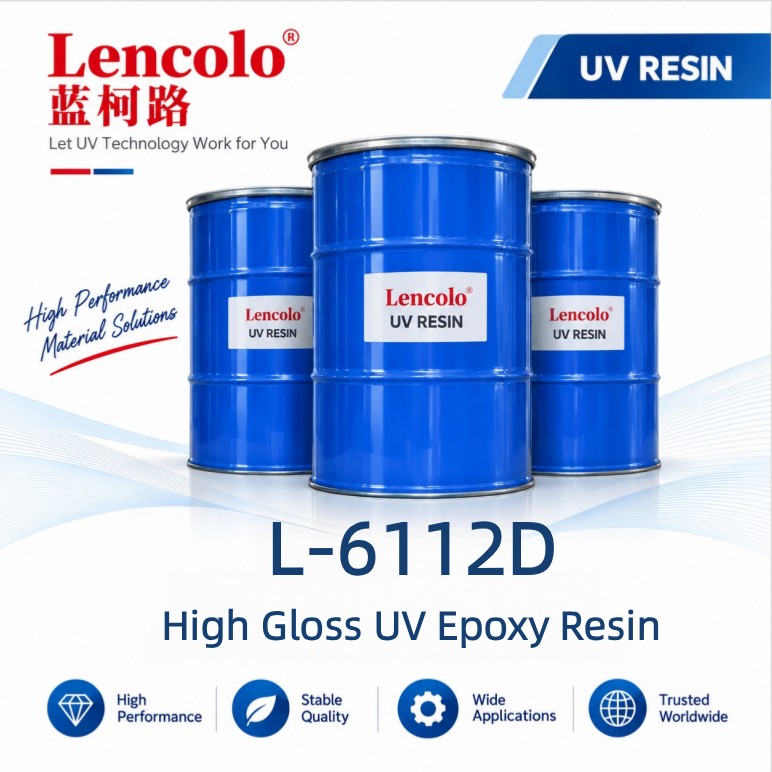
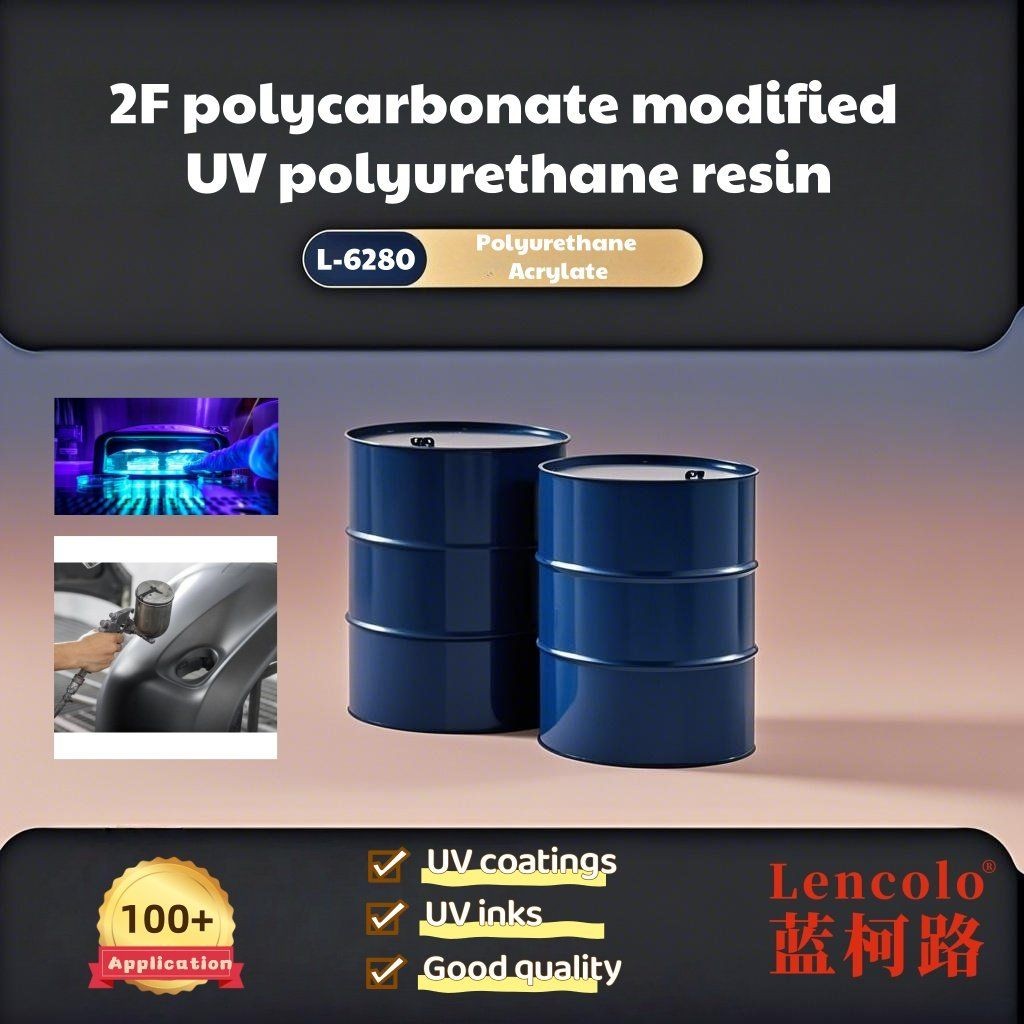
Lencolo's polyurethane acrylate portfolio includes grades for different coating requirements. L-6207 can be evaluated for applications requiring wear resistance and flexibility, while L-6280 may be considered where toughness and intercoat adhesion are important. L-6611 is another candidate for applications that prioritize hardness and abrasion resistance.
UV Printing Inks
UV inks require suitable pigment wetting, viscosity, transfer behavior, adhesion, and curing response. Flexographic, screen, and inkjet systems have different viscosity and performance requirements.
A lower-viscosity oligomer may help with flow and processing, but it must still provide sufficient adhesion and cured-film properties. Buyers should test the complete ink formulation rather than evaluating the oligomer in isolation.
UV Adhesives
UV adhesives may require flexibility, peel strength, impact resistance, transparency, and adhesion to different substrates. Difunctional polyurethane acrylates can be considered when flexibility and toughness are important.
The final adhesive performance also depends on substrate preparation, adhesive thickness, curing access, and the selected monomers and photoinitiators.
Plastic Coatings
Plastic substrates such as ABS, PC, and PMMA can require a careful balance between adhesion, flexibility, surface hardness, and resistance to cracking. A highly crosslinked coating may provide hardness but can become too brittle for a flexible substrate or application.
Lencolo L-6205, L-6207, and L-6280 are examples of grades that can be screened for different plastic and advanced coating requirements. The appropriate choice depends on the substrate, coating structure, and target performance.
3D Printing
For UV-curable 3D printing materials, resin selection involves viscosity, curing speed, dimensional stability, toughness, elongation, and mechanical strength. Polyurethane acrylates may be used to improve flexibility and impact resistance, but the final properties depend on the complete resin formulation.
A supplier should be able to discuss how an oligomer performs with the customer's selected monomers, photoinitiators, exposure wavelength, and post-curing process.
4. How to Evaluate Polyurethane Acrylate Oligomer Manufacturers in China
Technical Documentation
Before ordering samples, request the following documents where applicable:
Check whether the documents correspond to the specific product grade and destination market. Requirements such as REACH or RoHS should be confirmed according to the product, application, and applicable regulations rather than assumed to apply universally.
Sample Testing and Application Support
A supplier's laboratory data is useful, but it cannot replace testing under the buyer's actual production conditions.
A practical evaluation should include:
Testing the resin in the intended formulation.
Checking viscosity, compatibility, and application behavior.
Evaluating adhesion, hardness, flexibility, and surface appearance.
Checking curing performance at the intended UV wavelength and dose.
Comparing results across production batches where possible.
For important projects, testing samples from different batches can help evaluate consistency. Buyers should also assess whether the supplier can provide technical explanations and support when the formulation needs adjustment.
Quality Consistency and Supply Reliability
Batch consistency is essential for industrial production. Buyers should compare viscosity, color, solids content, and other relevant specifications across batches.
It is also useful to clarify production lead time, minimum order quantity, packaging, storage requirements, change-control procedures, and the supplier's ability to maintain stable supply.
A competitive price is valuable only when the material can consistently meet the required specifications.
5. Lencolo: A China-Based Supplier of UV Resins and Functional Materials
Guangdong Lencolo New Material Co., Ltd. is a China-based manufacturer and supplier of specialty resins and functional materials under the Lencolo brand. Established in 2018, with a predecessor business dating back to 2013, the company focuses on UV-curable materials and related formulation solutions.
Its operations include a 20,000 m² production facility and a 2,500 m² R&D center in Dongguan, Guangdong, China. Its product portfolio covers UV resins, selected monomers, photoinitiators, functional additives, and semi-finished materials for different industrial applications.
For buyers sourcing polyurethane acrylate oligomers in China, Lencolo provides several grades designed around different performance requirements. These include flexible and fast-curing materials, grades balancing hardness and flexibility, polycarbonate-modified materials, and aliphatic polyurethane acrylates for applications where color stability and abrasion resistance matter.
Beyond individual resin grades, the company can support customers with material selection, sample evaluation, formulation compatibility discussions, and application-specific development. This can be relevant to manufacturers working on UV coatings, printing inks, adhesives, plastic coatings, flooring, and 3D printing materials.
Buyers can explore the company's raw materials and semi-finished materials at https://lencolo37.com/ and its formulated products and application solutions at https://www.lencolochem.com/.
6. A Practical Checklist Before Choosing a Supplier
Before making a purchasing decision, compare potential manufacturers using the same criteria:
Does the resin match the intended application and substrate?
Are functionality, viscosity, solids content, and other specifications clearly documented?
Does the material cure under the customer's actual UV equipment and wavelength?
Can it achieve the required balance of hardness, flexibility, adhesion, and durability?
Are TDS, SDS, and batch-specific quality documents available?
Can the supplier provide application support and investigate technical problems?
Are batch consistency, lead time, packaging, and commercial terms acceptable?
A supplier should be evaluated not only by its product catalog but also by its ability to provide reliable materials and technical support over the course of a project.
Conclusion
Selecting a polyurethane acrylate oligomer manufacturer in China requires a systematic evaluation of chemistry, functionality, viscosity, curing performance, application suitability, documentation, and quality consistency.
There is no single polyurethane acrylate grade that meets every requirement. The best choice depends on the substrate, formulation, processing conditions, and target performance.
Lencolo offers a range of UV polyurethane acrylate resins and related functional materials for coatings, inks, adhesives, plastic applications, and 3D printing. By matching the appropriate grade to the actual application and validating it through formulation testing, buyers can make more informed sourcing decisions and build a more reliable UV-curable material system.
#UVHardCoating #HardCoating #PETFilm #PCFilm #PMMAFilm #ScratchResistance #SurfaceProtection #UVCurableCoating #ProtectiveFilm #FunctionalCoating #UVHardCoating #polyurethaneresin #FilmCoating #ScratchResistantCoating #AntiFingerprintCoating #ProtectiveFilm #UVResin #SurfaceEnhancement #FunctionalFilm #CoatingSolutions

2025-01-06

2022-08-03