service@lencolo37.com |
+86 18027002837(WhatsApp)

Search for Products.
The UV-curable coatings market is anticipated to reach $13.1 billion by 2028, growing at a CAGR of 9.6% during the forecast period.
As you formulate UV base coating solutions for spray applications, resin selection becomes your primary control over both leveling and adhesion. You must balance viscosity, functionality, and substrate compatibility. Understanding oligomer chemistry lets you predict and master coating performance.
Key Takeaways
How Resin Viscosity Influences Spray Coating Leveling
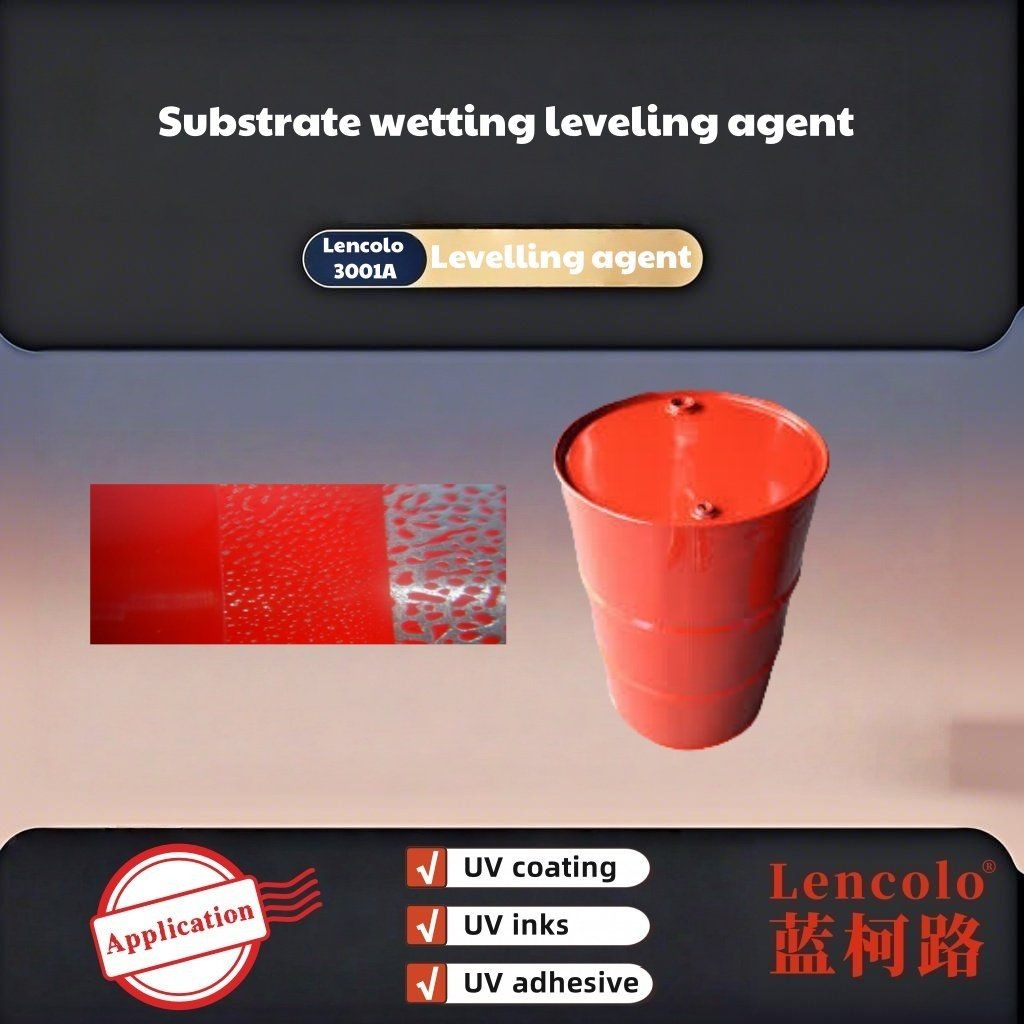
Leveling controls the final appearance of your cured film. You achieve either a smooth, uniform surface or an undesirable orange-peel texture. In UV base coating solutions for spray applications, resin viscosity and oligomer structure dictate wet-film flow before photoinitiation. Understanding these relationships helps you formulate coatings that level properly at application viscosity.
The Role of Oligomer Molecular Weight
Oligomer molecular weight directly controls the base viscosity of your formulation. High-molecular-weight oligomers produce long polymer chains. These chains entangle easily, raise viscosity, and resist flow after spray atomization. Low-molecular-weight oligomers flow readily but often sacrifice cured-film hardness and chemical resistance.
Branched multifunctional acrylate oligomers with acrylate functionality greater than 2 and nitrogen content of at least 0.35 mEq/g achieved 30–50% lower viscosity than linear oligomers. This enabled synergistic crosslinking without reactive diluents and reduced VOC emissions. Flow and leveling agents are typically added at 0.1–1 wt% to optimize coating appearance.
Branched architectures offer a practical solution. Their compact structure reduces chain entanglement while maintaining high crosslink functionality. You can achieve lower application viscosity without diluting the reactive system. Linear oligomers of equivalent molecular weight tend to require more monomer or solvent to reach sprayable viscosity. This extra dilution often compromises final film properties.
Viscosity Ranges for Spray Application
Spray application demands a narrow viscosity window. For low dry film thicknesses of 5 to 7 microns, excessively high viscosity prevents acceptable leveling. Orange peel and other surface defects appear readily. The wet film must flow quickly after impact to merge droplets into a continuous, smooth layer.
High-viscosity formulations commonly produce:
These defects appear when the coating cannot level within the available open time before curing. You should target a spray viscosity that balances atomization quality with sag resistance. Typically, UV base coating solutions for spray applications require lower viscosity than their roller- or curtain-coated counterparts.
Oligomers contribute most to coating properties and viscosity. Some urethane and epoxy acrylates are so viscous that reactive diluents become necessary just to make them handleable. Heat may still be required. When you measure initial resin viscosity, remember that oligomer choice controls the starting point for all adjustments.
Reactive Diluents and Their Impact on Flow
Reactive diluents vary by structure and acrylate functionality. They represent the best way to control viscosity. Monofunctional diluents lower viscosity with minimal effect on crosslink density. Multifunctional diluents reduce viscosity while contributing to the cured network. They also increase shrinkage and may affect adhesion.
| Reactive Diluent Concentration | Effect on Flow | Effect on Adhesion / Other Properties |
|---|---|---|
| 5–15% by weight | Improves flow and leveling while maintaining stability | Balanced with adhesion; general working range |
| 10% | Optimal yield stress (50–80 Pa) for brush-applied coatings | Maintains over 90% gloss retention |
| Up to ~12% | Supports flow | Maintains ~95% of original adhesion strength; beyond 12% crosslink density drops and solvent resistance decreases |
| 15–18% | Ideal balance for flow; achieves sub-5 μm surface roughness | Preserves over 90% of base resin hardness |
| Above 18% | — | Reduces crosslink density; hardness decreases by 2–3 Shore D points |
Treat reactive diluent concentration as a performance lever. At 5–15% by weight, you improve flow while preserving stability. At 15–18%, you achieve the best surface smoothness without sacrificing hardness. Above 18%, crosslink density drops and solvent resistance weakens. For spray formulations, selecting the right diluent type and concentration separates a defect-free finish from a rejected part.
Temperature Effects on Leveling Performance
Heating the coating before spraying can lower viscosity and improve flow and leveling. Many formulators use heated recirculation systems to maintain a consistent application temperature. This approach widens the process window without adding solvent or reactive diluent.
Excessive heat or prolonged elevated temperature can degrade stabilizers. Premature polymerization becomes a real risk. You must match the temperature schedule to the thermal stability of your chosen oligomer system. Short-term heating reduces viscosity effectively. Long-term exposure risks gelation and batch failure.
Organic solvents reduce viscosity more efficiently than reactive diluents. They also tend to have lower surface tension, which improves wetting and widens the process window. Slower-evaporating solvents improve flow and leveling. However, they prolong flash times, increase processing time, and risk substrate attack. When you design UV base coating solutions for spray applications, weigh solvent retention against cured-film performance. Higher flash times allow better leveling but slow production throughput. For heat-sensitive plastic substrates, solvent choice matters more than temperature management.
Choosing the right oligomer structure and application temperature ultimately determines whether your spray coating levels into a smooth, defect-free film. UV base coating solutions for spray applications depend on this balance of resin viscosity, reactive diluent loading, and thermal control.
How Resin Chemistry Drives Adhesion
Adhesion determines whether your cured film remains bonded to the substrate. Resin chemistry controls this behavior at the molecular level. Three factors dominate the interaction: functionality, polarity, and substrate compatibility. Each factor shifts the balance between internal film stress and interfacial bond strength.
Functionality and Crosslink Density
Acrylate functionality counts the reactive double bonds on each oligomer. Difunctional oligomers contain two acrylate groups. Trifunctional and higher oligomers carry three or more. Your choice of functionality determines the crosslink density of the cured network.
Higher functionality produces denser networks. You gain hardness, scratch resistance, and solvent resistance. You also pay a price. Dense networks shrink more during curing and resist deformation. The resulting internal stress pulls against the substrate interface. When this stress exceeds the adhesive bond, the film delaminates.
UV-curable coatings typically show 5–15% volume shrinkage. The stress appears suddenly during photoinitiation. On rigid substrates like metal or glass, the film cannot relax. On flexible plastics, the film may warp. You must balance crosslink density against these mechanical consequences.
| Oligomer example | Acrylate functionality | Crosslink density / hardness outcome | Adhesion outcome |
|---|---|---|---|
| BRC-843SD1 hydrophobic urethane acrylate | Difunctional | Enhances hardness | Improves adhesion on plastic, glass, and steel |
| XR-9416 water-dilutable urethane acrylate | Trifunctional | Enhances crosslink density in waterborne formulas; scratch-resistant | Formulated for coatings and inks |
| BR-7432GB polyester urethane acrylate | Difunctional | Provides impact resistance and toughness | Excellent adhesion to various substrates |
| BR-116 aromatic polyether urethane methacrylate | Trifunctional | Used in soft coatings and adhesives | Designed to adhere to metals and glass |
Difunctional urethane acrylates often outperform higher-functional grades in adhesion. They form linear networks with enough flexibility to absorb shrinkage stress. Lencolo's UV resin line includes urethane acrylates with controlled functionality for spray-coating formulations. You can select a grade that balances hardness and adhesion without adding excessive monomer.
The blending strategy matters just as much as the base oligomer. Monofunctional urethane acrylates can replace a portion of your multifunctional monomers. One documented system combines 30 wt% monofunctional urethane acrylate with 50 wt% TMPTA and 20 wt% isobornyl acrylate. This blend reduces volume shrinkage from 10–12% down to 6–8%. Lower shrinkage improves adhesion to rigid substrates and reduces warpage in films thicker than 50 microns.
| Aspect | Effect of High Crosslink Density | Mitigation Strategy |
|---|---|---|
| Curing shrinkage | Increases (typically 5–15 vol%) | Incorporate flexible oligomers (urethane or polyether acrylates) |
| Curing shrinkage | Increases (typically 5–15 vol%) | Use alicyclic monomers with low polymerization shrinkage |
| Curing shrinkage | Increases (typically 5–15 vol%) | Limit polyfunctional monomer content to <30 mass% |
| Hardness/solvent resistance | Increases | — |
| Flexibility | Decreases | — |
You can control shrinkage-induced adhesion loss through several levers. Flexible oligomers absorb stress. Alicyclic monomers reduce polymerization shrinkage. Limiting polyfunctional monomer content below 30 mass% preserves flexibility. Each approach trades some hardness for improved bond integrity.
Other limitations of UV-curable coatings include the absence of a dark cure mechanism, difficulty in spraying and curing 3D parts, and poor adhesion and flexibility due to shrinkage during the curing process.
Polarity and Substrate Wetting
Polarity determines how well your resin interacts with the substrate surface. Polar functional groups include hydroxyl, carboxyl, amine, and phosphate. These groups form hydrogen bonds and secondary interactions with high-energy surfaces. Non-polar resins lack these anchoring groups and rely only on mechanical interlocking and van der Waals forces.
You influence polarity directly through resin selection. Hydroxyl-functional urethane acrylates demonstrate this effect clearly. One grade with an OH value of 80 mg KOH/g reaches peel strengths of 1.5–2.5 N/mm on treated surfaces. The hydroxyl groups bond to oxide layers on metals and polar groups on plastics.
Wetting depends on the surface tension relationship between your coating and the substrate. A coating spreads when its surface tension is lower than the substrate's surface energy. High-polarity resins reduce contact angle and improve coverage. A fully wetted interface maximizes the contact area for adhesive bonding.
High-polarity resins do not suit every surface. Polar resins bead up on non-polar plastics like polypropylene instead of spreading. You then need surface activation or a polarity adjustment in your resin system. Non-polar resins, meanwhile, lack the interactions needed for strong bonds on glass and metal.
You can fine-tune polarity with functional monomers. Acid-functional monomers improve adhesion to metals but reduce water resistance. Amine-functional monomers bond well to plastics yet risk yellowing. Phosphate-functional monomers excel on metal oxide surfaces. Evaluate each option against your full performance profile before committing.
Adhesion to Plastic Substrates
Plastics span a wide range of surface energies. Engineered plastics like polycarbonate and ABS accept coatings readily. Polyolefins such as polypropylene and polyethylene sit at the opposite extreme. Their non-polar, hydrophobic surfaces repel most coatings.
For low-surface-energy plastics such as polypropylene and polyethylene, UV spray coatings require an initial surface treatment—such as plasma or flame—or a specialized adhesion-promoting primer to achieve the adhesion the coating needs.
You have several preparation routes before spraying:
Flame plasma treatment and atmospheric plasma offer practical solutions for inline spray-coating operations. Both methods integrate directly into a production line. Surface texture also contributes. A mold with a 1200-grit buffed finish improves mechanical bond strength. Keep the surface clean because silicone mold release, grease, and dust inhibit both pretreatment and adhesion.
Your resin choice complements these surface preparations. Hydrophobic urethane acrylates, such as BRC-843SD1, show improved adhesion on plastic substrates. These resins contain non-polar segments that match polyolefin surface energy more closely. They form durable bonds on normally difficult plastics when surface activation is applied properly.
Lencolo supplies UV resins engineered for challenging substrates. Their product range supports adhesion to decorative films, plastic panels, and flooring surfaces. You can also combine these resins with Lencolo's functional additives to improve wetting and leveling on low-energy surfaces.
Adhesion to Metal Substrates
Metals present high surface energy, so wetting comes naturally. Yet metal adhesion still fails under stress. The cause lies in the rigid interface. Metals cannot flex to release curing shrinkage. Stress concentrates at the bond line and eventually breaks it.
Difunctional polyurethane acrylates provide the best balance for metal substrates. They crosslink sufficiently for hardness and solvent resistance. Their flexible chains absorb shrinkage stress without sacrificing the bond. Polyester urethane acrylates like BR-7432GB deliver excellent adhesion across various substrates while adding impact resistance and toughness. Aromatic polyether urethane methacrylates such as BR-116 specifically target metals and glass.
Cleanliness of the metal surface matters. Oils, stamping lubricants, and oxide layers create weak boundary regions. Solvent wiping or alkaline cleaning before coating removes these contaminants. Surface preparation directly affects how many bonding sites remain available to your resin.
Curing conditions also influence metal adhesion. Metals conduct heat away from the film, which slows the cure at the interface. An incomplete bottom cure leaves a weak layer near the metal surface. Match your photoinitiator package to the film thickness and lamp intensity. Ensure sufficient radical generation at the substrate interface.
Phosphate-modified acrylates add strong anchoring for demanding metal applications. The phosphate group chemically bonds to metal oxide surfaces. When blended with flexible urethane acrylates, these systems improve wet adhesion and corrosion resistance. You can also incorporate adhesion promoters at 0.5–2% by weight for additional bond strength.
Comparing Common Resin Types
Each oligomer family brings distinct strengths to UV spray coatings. You must match the chemistry to your substrate, cure requirements, and performance targets.
Urethane Acrylates
Urethane acrylates deliver balanced toughness and flexibility. They cure faster than epoxy resins, which suits quick-turnaround projects. They also provide better adhesion and lower shrinkage than polyester resins. You gain superior yellowing resistance for clear coats. The trade-off is higher viscosity and cost. You often need monomeric diluents to reach spray viscosity. Lencolo's BRC-843SD1 hydrophobic urethane acrylate improves adhesion on plastic, glass, and steel.
Epoxy Acrylates
Epoxy acrylates offer the lowest cost among the three families. They provide good hardness and chemical resistance. Their high viscosity limits spray formulation latitude. They also yellow over time, which restricts outdoor use. You should select epoxy acrylates for interior applications where cost matters more than color stability.
Polyester Acrylates
Polyester acrylates combine low viscosity with excellent adhesion. They outperform urethane and epoxy grades in abrasion resistance. Their low viscosity allows greater formulation freedom for spray applications. Lencolo's polyester acrylate line demonstrates these benefits clearly:
| Property | Urethane Acrylate | Epoxy Acrylate | Polyester Acrylate |
|---|---|---|---|
| Abrasion Resistance | Moderate | Poorest | Best |
| Adhesion | Good | Fair | Best |
| Viscosity | High | High | Low |
| Cost | Highest | Lowest | Moderate |
| Yellowing Resistance | Superior | Poor | Good |
Specialty Oligomers for Challenging Substrates
Low-surface-energy plastics demand specialized chemistry. Polyether urethane acrylates suit flexible PVC and TPU. Polyester urethane methacrylates promote adhesion on difficult surfaces. Lencolo's Easmer EA625 epoxy acrylate targets PE and PP with low viscosity and shrinkage below 5%.
Practical Formulation Tips for Optimal Results
Your formulation strategy determines whether your resin choice succeeds. Practical adjustments to viscosity, additives, and testing protocols produce reliable spray-coating results.
Balancing Viscosity with Reactive Diluents
Reactive diluents fine-tune your spray viscosity. Monofunctional diluents reduce viscosity with minimal shrinkage. Multifunctional diluents add crosslink density but increase cure stress. Start with 10–15% by weight of a low-viscosity monomer. Adjust the ratio based on atomization quality. UV base coating solutions for spray applications require a viscosity window allowing droplet coalescence within two to three seconds. Lencolo's selected UV monomers complement its resin line, letting you dial in the exact flow behavior.
Additives for Leveling and Adhesion Promotion
Additives correct what resin chemistry cannot. Silicone-based leveling agents reduce surface tension and promote uniform wet-film flow. Use them at 0.1–0.5% by weight. Phosphate acrylate adhesion promoters strengthen bonding on metal and glass. Chlorinated polyolefin promoters handle plastic substrates effectively. UV base coating solutions for spray applications often need both additive types in balance. Lencolo supplies functional additives for wetting, leveling, and adhesion improvement across industrial coatings. Add them slowly while mixing to avoid air entrapment.
Testing Protocols for Resin Selection
Systematic testing eliminates guesswork. Prepare each resin candidate at identical application viscosity. Spray onto representative substrates alongside a control formulation. Measure leveling visually and with surface profilometry. Test adhesion using crosshatch and tape-pull methods after full cure. Repeat the test after water immersion and thermal cycling. UV base coating solutions for spray applications demand this rigorous evaluation. Document substrate type, cure parameters, and environmental conditions for every sample.
Lencolo supports this process with technical data sheets, SDS documentation, and application guidance. Their 2,500 m² R&D center in Dongguan enables consistent sample supply and formulation support.
You must balance leveling and adhesion through careful evaluation of viscosity, functionality, and substrate compatibility. No single resin excels at every property. Test multiple oligomers for each specific application. Systematic testing of resin candidates against your target performance criteria ensures an optimal coating formulation.
FAQ
Which resin type gives the best leveling in UV spray coatings?
Polyester acrylates offer low viscosity and excellent flow. Lencolo's TK3302 provides low viscosity with good anti-spray performance. You achieve smoother films with less orange peel.
How do you improve adhesion to polypropylene substrates?
You need surface activation through plasma or flame treatment. Then select hydrophobic urethane acrylates like Lencolo's BRC-843SD1. This combination delivers durable bonding on low-energy plastics.
What testing confirms your resin choice works?
Spray each candidate at identical viscosity onto representative substrates. Test adhesion with crosshatch and tape-pull methods. Repeat after water immersion and thermal cycling. Document all cure parameters and environmental conditions.
#UVCoatings #UVResin #UVSprayCoating #UVCoatingResin #UVResinSelection #UVCoatingAdhesion #CoatingLeveling #PolyesterAcrylate #UrethaneAcrylate #EpoxyAcrylate #UVCoatingFormulation #PlasticCoating #IndustrialCoatings #Lencolo

2025-01-06

2022-08-03