service@lencolo37.com |
+86 18027002837(WhatsApp)

Search for Products.
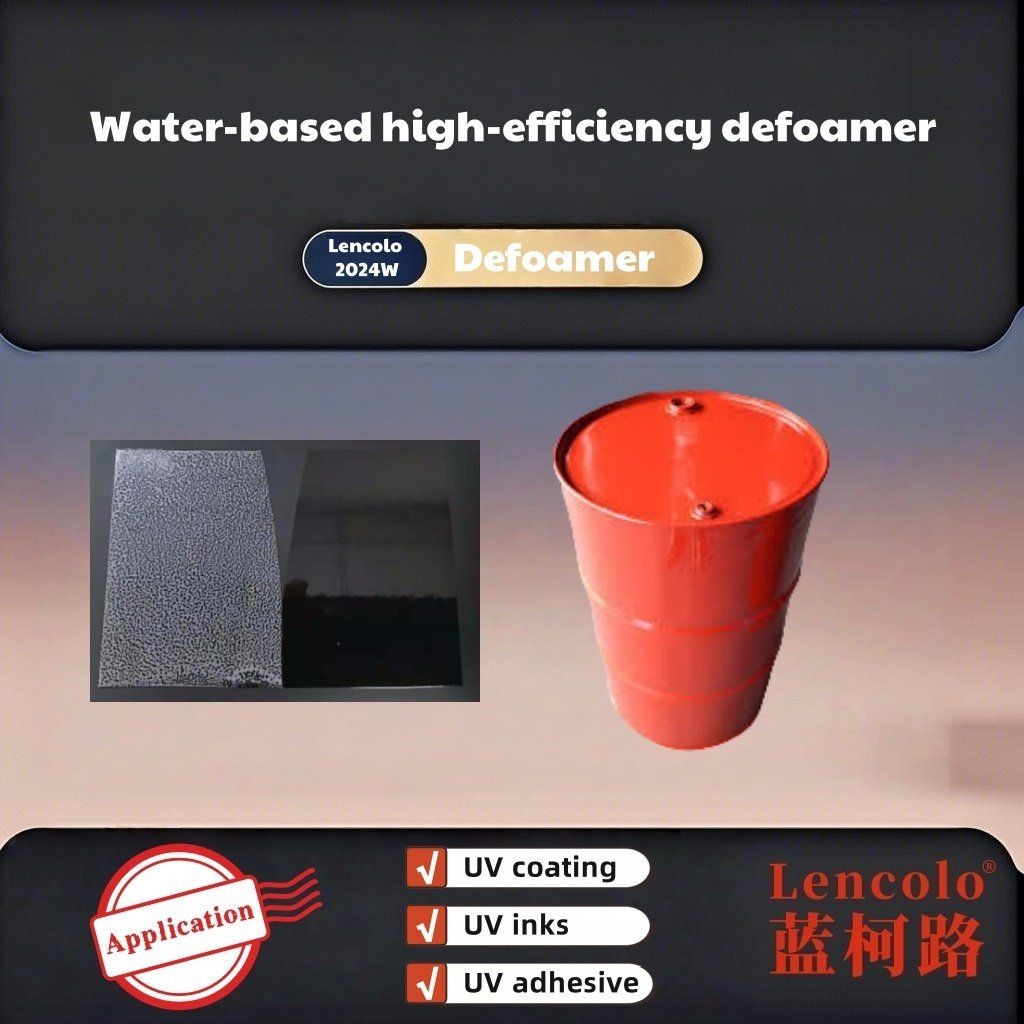
Bubbles and foam are among the most persistent challenges faced by formulators working with UV-curable coatings. Even small amounts of trapped air or micro-foam can compromise film clarity, adhesion, and overall surface performance. For coating manufacturers, ink producers, and formulators, the difficulty is often not simply removing visible bubbles, but understanding why air becomes trapped in the first place.
In UV-curable systems, formulation chemistry, additive selection, application conditions, and curing behavior are closely connected. A more reliable solution therefore starts with identifying the source of the defect before changing the formulation.
Why Bubbles and Foam Occur in UV Coatings
Foaming and bubble entrapment in UV coatings typically result from a combination of formulation and process factors. Foaming may occur alongside poor pigment wetting, poor substrate wetting, or inadequate leveling. These issues are often interconnected.
A formulation with insufficient wetting can be more likely to trap air during mixing, coating, or printing. At the same time, poor leveling can prevent entrapped air from escaping before the coating is exposed to UV or LED light.
The rapid curing characteristics of UV systems make this particularly important. Once the coating begins to cure and viscosity increases rapidly, bubbles that have not escaped can become effectively locked into the film. This leaves less opportunity for air release compared with processes where the coating remains fluid for a longer period before drying or curing.
For this reason, bubble control should be considered during formulation and application rather than only after a surface defect appears.
Press enter or click to view image in full size
The Role of Functional Additives in Bubble and Foam Control
Functional additives are an important part of controlling foam and bubble-related defects, but different additives address different aspects of the coating system.
Defoaming additives help suppress or eliminate foam generated during mixing, pumping, and application.
Wetting additives improve pigment and substrate wetting, which can reduce the tendency for air to become trapped at interfaces.
Leveling additives support more uniform film formation and can provide additional time or improved conditions for entrapped air to escape before curing.
Dispersing additives help maintain uniform pigment distribution and formulation stability, which can also influence foam behavior in pigmented systems.
The challenge is that additive selection involves trade-offs. An excessive or incompatible additive dosage may affect surface tension, adhesion, recoating, slip, gloss, or leveling. A stronger defoaming effect does not necessarily mean a better overall coating.
This is why bubble and foam problems are better approached as formulation problems rather than as a simple search for a stronger defoamer.
Formulation Factors Beyond Additives
Additives are only one part of the system. Resin viscosity, monomer selection, photoinitiator choice, and overall formulation balance can significantly influence air release and curing behavior.
A formulation with excessively high viscosity, for example, may resist air release even when an appropriate defoaming additive is present. Monomer selection can affect both viscosity and film formation, while photoinitiator selection influences curing speed and therefore the amount of time available for entrapped air to escape.
This relationship becomes especially important when the coating must achieve several properties at the same time. Adhesion, hardness, flexibility, viscosity, curing speed, scratch resistance, and chemical resistance may all need to be balanced.
As a result, material selection for industrial UV formulations should consider the complete formulation, substrate, processing method, curing conditions, and target performance rather than relying on a single product property.
There is no universal additive or raw material that can solve every bubble or foam problem across different UV coating systems.
Application and Curing Conditions Also Matter
Formulation chemistry is only one side of the problem. Mixing speed, pumping equipment, spray or coating parameters, film thickness, and curing conditions can all affect how air enters the system and whether it has enough time to escape.
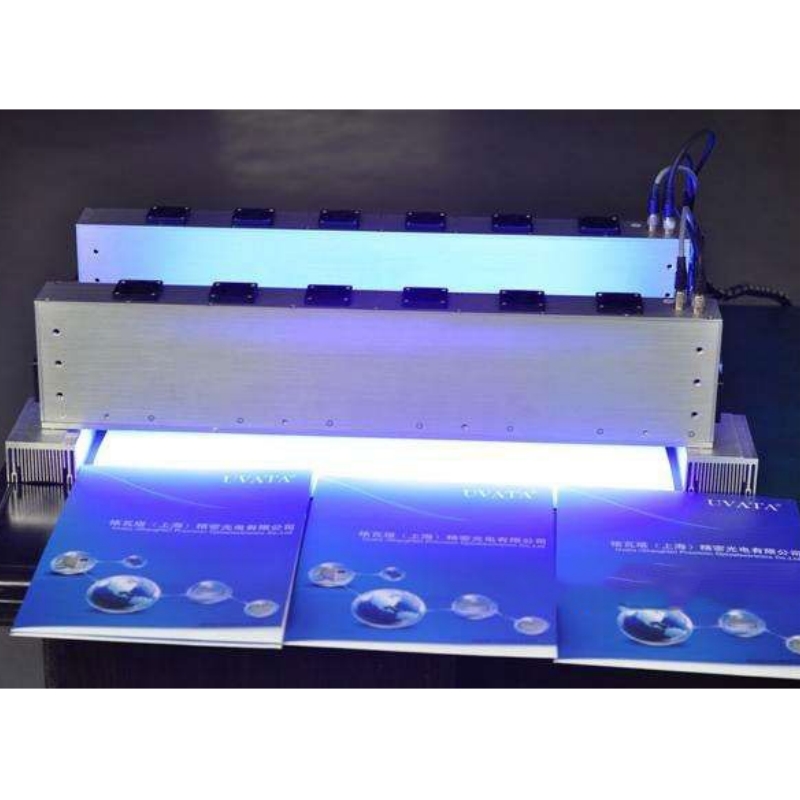
UV lamp or LED wavelength and curing intensity are also relevant. A formulation that levels well under one curing condition may show trapped bubbles when exposed to a faster or more intense curing process.
Film thickness deserves particular attention in high-build UV coatings. As the coating becomes thicker, air has a greater distance to travel before reaching the surface. If curing begins too quickly, the opportunity for air release becomes even more limited.
This is why adjustments to a coating system should be evaluated as a whole. A change intended to improve curing speed, for example, may unintentionally reduce air-release time. Similarly, reducing viscosity to improve leveling may influence hardness, adhesion, or other final properties.
Diagnose the Root Cause Before Changing the Formulation
Bubble defects in UV coatings rarely have a single universal cause. Similar surface defects may result from insufficient air release, excessive surface tension, poor substrate wetting, foam introduced during mixing, inadequate leveling, or premature curing.
One of the most useful troubleshooting methods is therefore to determine when and where the bubbles appear.
If foam is already visible during mixing, the source may be related to agitation, formulation surface tension, or additive compatibility. If bubbles appear during coating or printing, application conditions and substrate wetting may require closer attention. If the coating looks acceptable before exposure but develops trapped bubbles after UV curing, curing speed, film thickness, viscosity, and air-release behavior become more relevant.
Once the stage at which the defect develops has been identified, formulation changes can be made more selectively. Depending on the situation, this may involve adjusting the defoaming approach, optimizing wetting or leveling, modifying the resin and monomer balance, changing viscosity, or reviewing application and curing conditions.
This systematic approach is particularly relevant to high-build UV coatings, SPC and PVC flooring coatings, UV transfer coatings, and high-solids spray systems, where air release, surface appearance, adhesion, and curing performance must often be considered together.
When Standard Adjustments Are Not Enough
Some persistent foaming and bubble problems cannot be resolved simply by increasing or replacing a conventional additive. This is especially true when coating thickness, substrate characteristics, surface tension, application equipment, and curing conditions interact with one another.
In these situations, formulation optimization may require evaluation of different resin and additive combinations, viscosity ranges, surface-control properties, and curing behavior under actual processing conditions.
The development target may be a specific raw material, a combination of materials, a semi-finished formulation, or a complete coating system. Looking at these elements together can provide a more practical route to improving coating stability and reducing repeated trial-and-error during formulation development.
A Systematic Approach to Bubble and Foam Control
Preventing bubbles and foam in UV coatings is rarely the result of changing a single ingredient. The final coating behavior reflects the interaction between resin and monomer selection, functional additives, formulation viscosity, substrate wetting, mixing and application processes, film thickness, and UV curing conditions.
For manufacturers dealing with persistent formulation or surface defects, access to different levels of material support can make development more efficient. Lencolo provides UV resins, monomers, photoinitiators, functional additives, and formulated UV materials, supporting applications where material selection needs to be evaluated together with formulation, processing, curing conditions, and target performance. Depending on the project, customers can work with individual raw materials, semi-finished solutions, or formulated UV products.
Ultimately, effective bubble and foam control depends on understanding the complete coating system rather than focusing on a single additive. Appropriate material selection, formulation balance, and process control provide a more reliable foundation for achieving clear, uniform, well-adhered UV-cured films.
#UVCoatings #UVResin #BubbleControl #FoamControl #DefoamingAdditives #WettingAgents #LevelingAgents #UVCoatingFormulation #UVCuring #CoatingDefects #SurfaceQuality #FunctionalAdditives #IndustrialCoatings #CoatingTechnology #Lencolo

2025-01-06

2022-08-03