service@lencolo37.com |
+86 18027002837(WhatsApp)

Search for Products.
In automotive coating R&D and application, yellowing resistance is a critical benchmark—especially for topcoats and clearcoats, where yellowing often signals the beginning of coating failure. A common question among formulators is: does yellowing resistance depend more on the resin or the hardener? The answer lies in understanding how both work together to define the coating's long-term stability.
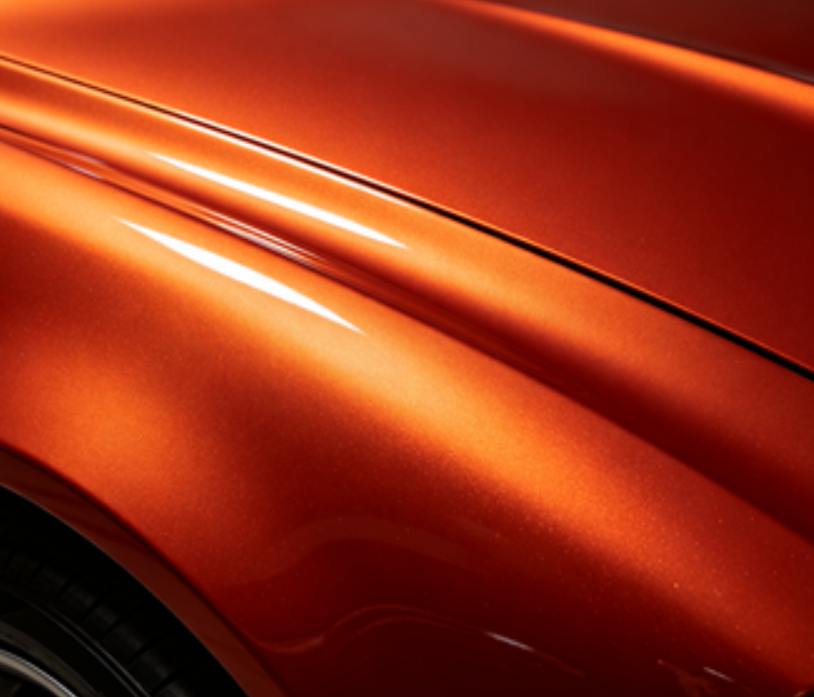
Yellowing is primarily caused by changes in the coating's chemical structure under environmental stress. Two major mechanisms drive this process: UV degradation, where ultraviolet energy breaks chemical bonds and forms chromophoric groups, and thermo-oxidative aging, where heat accelerates oxidation reactions that alter color. Regardless of the pathway, yellowing ultimately results from molecular instability—making the chemistry of both resin and hardener crucial.
The resin forms the backbone of the coating system and determines its inherent physical and chemical properties. In two-component systems, it sets the baseline for yellowing resistance by defining the core molecular structure. Among commonly used automotive coating resins, performance varies significantly.
Acrylic resins feature carbon–carbon backbone structures that offer excellent resistance to UV degradation, making them the preferred choice for automotive clearcoats. However, impurities such as residual initiators or unreacted monomers—and the introduction of sensitive functional groups to increase crosslink density—can still create potential yellowing risks if not carefully controlled.
Polyester resins are often used in basecoats and primers. Their ester linkages are more susceptible to hydrolysis and environmental degradation compared to acrylics, which can lead to a higher tendency toward yellowing under prolonged outdoor exposure. While cost-effective and versatile, they are less optimal for high-end clearcoat applications.
Alkyd resins contain a high number of unsaturated double bonds, making them highly prone to oxidation and yellowing under UV exposure. As a result, they have been largely eliminated from automotive topcoat systems and are now limited to niche uses such as internal components or primers.
In two-component systems, the hardener reacts with the resin to form a crosslinked three-dimensional network. Its chemical structure directly impacts the coating’s light stability and resistance to yellowing in real-world conditions.
Aromatic isocyanates such as TDI and MDI offer high reactivity, strong mechanical properties, and cost advantages. However, their benzene ring structures are highly susceptible to UV-induced oxidation, forming quinone structures that cause yellowing. Therefore, they are typically restricted to primers, mid-coats, or non-visible parts rather than clearcoats.
Aliphatic isocyanates like HDI and IPDI lack benzene rings and feature saturated or cycloaliphatic structures. This prevents the formation of yellowing-prone chromophores under UV exposure, resulting in superior weatherability and color retention. Today, HDI-based trimers and biurets are the standard choice for OEM and refinish clearcoats.
Yellowing resistance is not a competition between resin and hardener—it is a result of their synergy. The resin defines the intrinsic stability and sets the upper performance limit, while the hardener determines how that potential is realized in the final crosslinked film. A mismatch—such as pairing a UV-stable resin with an aromatic hardener—can still lead to premature yellowing.
Additives like UV absorbers (UVA) and hindered amine light stabilizers (HALS) are commonly used to further improve yellowing resistance. UVA molecules absorb harmful UV radiation, while HALS neutralize free radicals and slow down oxidative degradation. However, these additives can only enhance an already stable system—they cannot compensate for fundamentally unstable resin or hardener chemistries.
Achieving superior yellowing resistance in automotive coatings requires a holistic formulation strategy. Selecting a UV-stable resin and pairing it with an aliphatic isocyanate hardener forms the foundation, while performance additives provide incremental improvements. True durability is engineered at the molecular level—where every component plays a role.
#AutomotiveCoatings #ClearCoatTechnology #YellowingResistance #UVStability #CoatingFormulation #AcrylicResin #PolyesterResin #AlkydResin #Isocyanate #HDI #IPDI #Polyurethane #CoatingsInnovation #RefinishCoatings #OEMCoatings #MaterialScience #SurfaceEngineering #Weatherability #HALS #UVAbsorbers

2025-01-06
2022-08-03