service@lencolo37.com |
+86 18027002837(WhatsApp)

Search for Products.
It's a widely held belief in the coatings industry: the smoother the feel, the stronger the scratch resistance. From a physics standpoint, this idea isn't unfounded. Scratch behavior is closely related to the coefficient of friction (COF). A lower COF reduces surface drag, which helps minimize visible scuffing under light abrasion. That's why wax powders and slip additives are frequently introduced—to create a slick surface that reduces friction during contact.
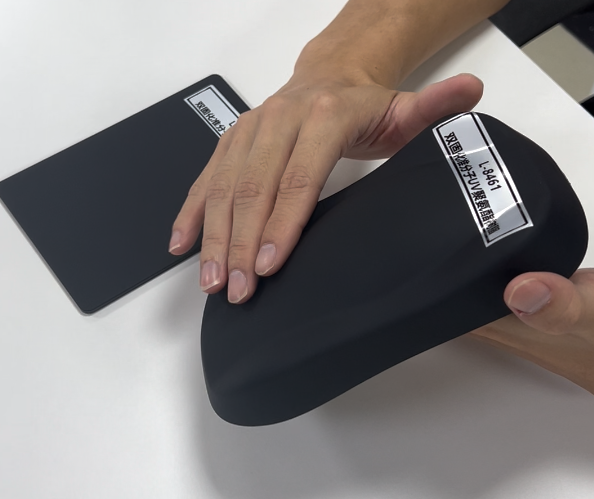
In practice, however, reduced friction does not automatically guarantee superior durability. Many formulations perform well against light rubbing, yet still show marks under strong pressure or sharp impact. The reason lies in the difference between surface sliding and structural deformation. Slip can reduce drag, but it does little to prevent indentation or brittle fracture when force is concentrated. In other words, a surface can feel smooth while still lacking internal resilience.
Toughness plays a critical role in true scratch resistance. A tough coating behaves like a spring—it absorbs and disperses impact energy rather than cracking under stress. Advanced formulations often turn functional fillers, such as matting agents, into reinforcing elements within the film. This internal structure helps distribute stress more evenly and reduces whitening or visible damage during scratching. Instead of relying solely on surface glide, toughness allows the coating to manage force from the inside out.
For industrial coatings and coil applications, hardness is equally essential. It provides resistance against sharp objects attempting to cut or penetrate the surface. Without sufficient hardness, even a flexible coating may deform permanently under concentrated load. Hardness acts as the coating’s armor, defending against intrusion and maintaining structural integrity under mechanical stress.
Slip still matters—but its role is strategic rather than singular. It reduces friction and helps disperse minor abrasion, serving as the first line of defense. However, slip alone cannot compensate for weaknesses in toughness or hardness. A coating designed only for smoothness may perform well in hand-feel tests, yet fall short under real-world mechanical challenges.
True scratch resistance is not about making force disappear—it is about controlling how the coating responds to it. The most effective systems strike a precise balance between hardness, toughness, and slip. They can release part of the applied stress, withstand localized pressure, and recover after deformation. In advanced coating design, smoothness may shape the first impression, but structural balance determines long-term performance.
#ScratchResistance #CoatingsTechnology #LowFrictionSurface #CoefficientOfFriction #COFControl #IndustrialCoatings #CoilCoating #ProtectiveCoatings #HighPerformanceCoatings #SurfaceEngineering #AdvancedMaterials #CoatingFormulation #WaxAdditives #SlipAdditives #MattingAgents #ImpactResistance #AbrasionResistance #SurfaceDurability #MechanicalPerformance #CoatingInnovation

2025-01-06

2022-08-03